
Muffler Man Statues in Lake Ozark, MO
Drivers approaching Bagnell Dam in Lake Ozark, Missouri, pass two fiberglass figures that tower over the roadside. Locals and visitors call them Muffler Men, a name that applies to a mid-century style of oversized statue rather than a single character. These landmarks tie Lake Ozark to a larger chapter of American roadside history. They also stand outdoors year-round in a climate that tests every exposed structure in Lake Ozark.
What Is a Muffler Man?
A Muffler Man is a molded fiberglass statue, typically 18 to 25 feet tall, designed to stand outside a business and hold a product. Fiberglass is a composite material made from glass fibers set in hardened resin, which makes it light, strong, and weather resistant. Bob Prewitt built the first figure in 1962, a Paul Bunyan holding an axe, for a cafe on Route 66 in Flagstaff, Arizona.
International Fiberglass of Venice, California, produced most of the statues after boatbuilder Steve Dashew founded the company in 1963. Its molds allowed workers to swap heads, arms, and torsos, so one base figure became a lumberjack, a cowboy, or a Native American-themed character. The company closed in 1976 which turned its surviving statues into collectible roadside landmarks.
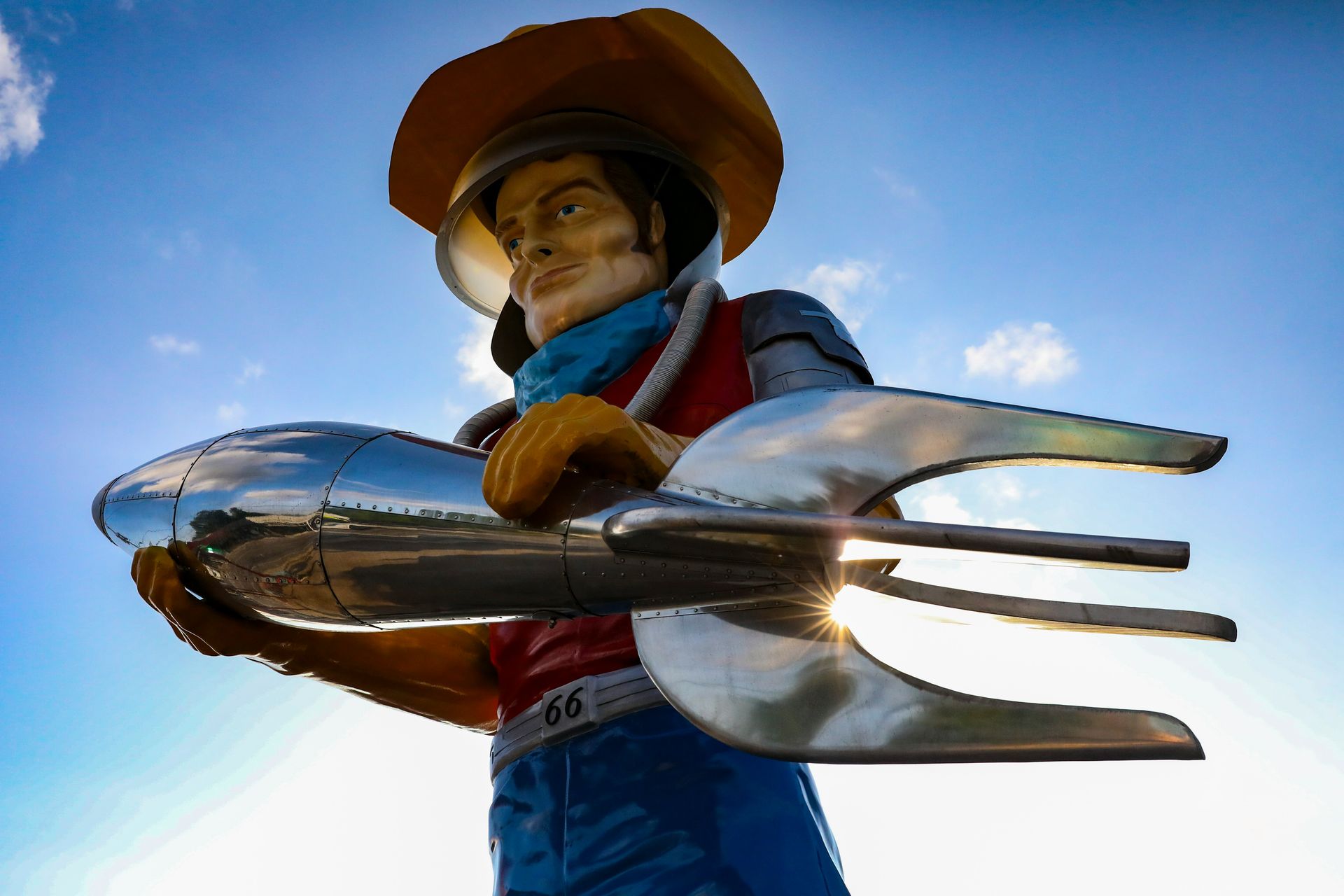
Image credit: Mick Haupt on Unsplash
Two Muffler Men on the Bagnell Dam Strip
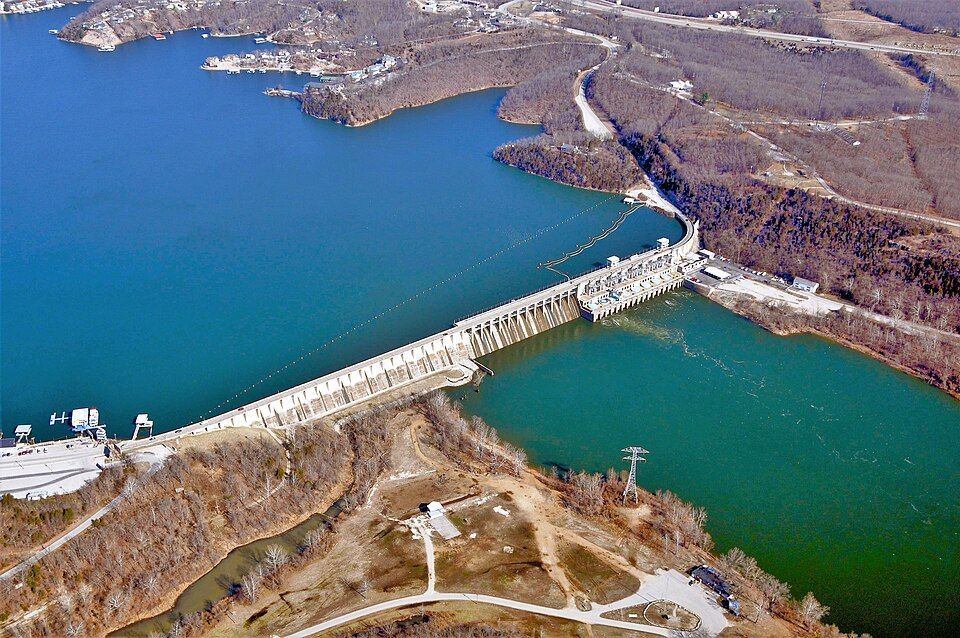
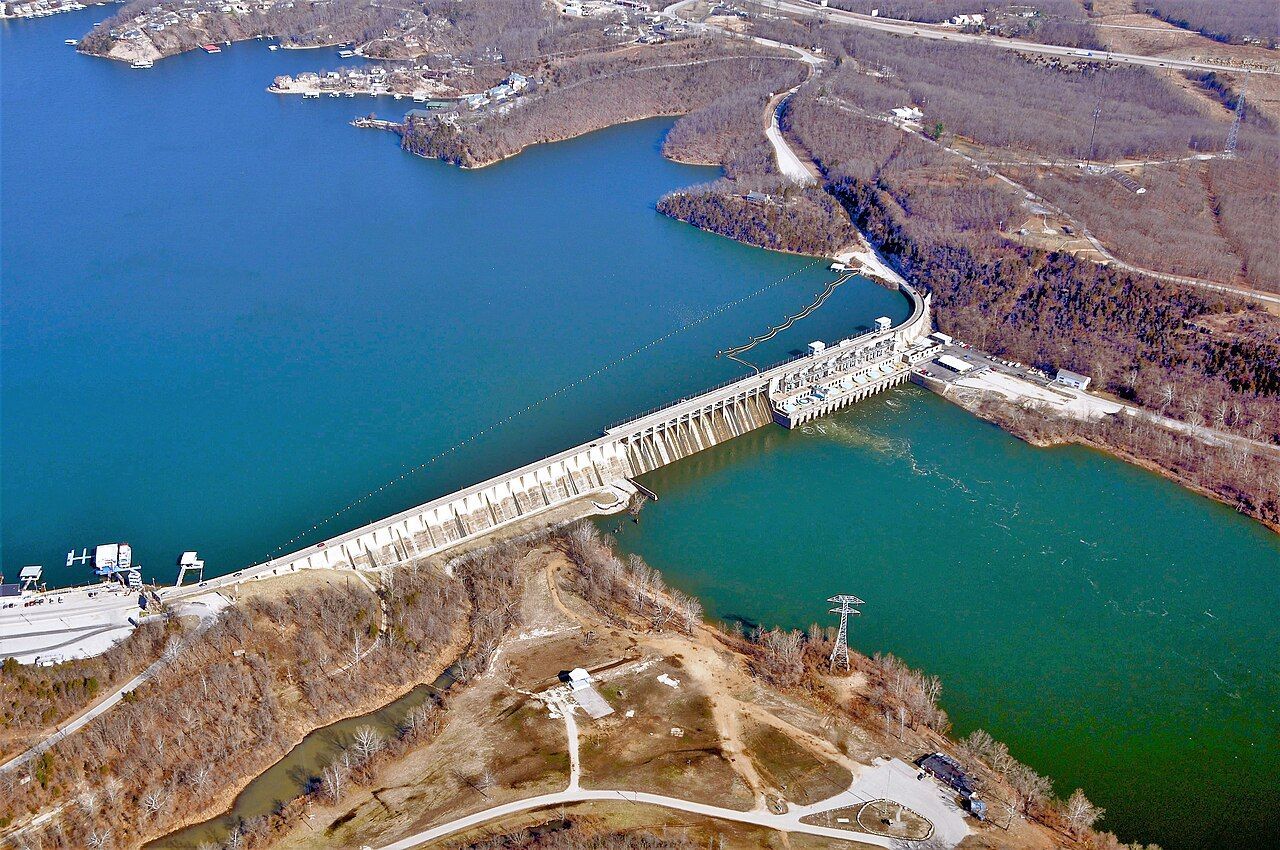
Lake Ozark’s statues stand along the Bagnell Dam Strip, the section of Bagnell Dam Boulevard that runs from Horse Bend Parkway to the dam. Union Electric, now Ameren, built Bagnell Dam between 1929 and 1931 to generate hydroelectric power. The 148-foot concrete dam impounded the Osage River and created the Lake of the Ozarks, which covers about 54,000 acres and has roughly 1,150 miles of shoreline.
The strip’s two figures are Chief Bagnell, a Native American-themed statue, and The Ozark Halfwit, a rural character. Chief Bagnell was restored and returned on August 13, 2016. The Ozark Halfwit returned in spring 2024 after about 14 years away, and vandals damaged it on May 11, 2024. That history is common for Muffler Men. Businesses closed, owners sold figures, and new buyers repainted or relocated them. The Lake Ozark pair reflects that pattern of loss, return, and repair.
Why Roadside Landmarks Matter to Lake Ozark
The lake became a major tourist destination soon after the dam opened. Roadside attractions grew alongside that tourism, and a 20-foot statue gave drivers an easy photo stop and a way to find a location. For residents, the figures work as local reference points and as part of the area’s identity.
The dam itself holds formal recognition. The National Register of Historic Places, the federal list of properties worth preserving, added Bagnell Dam in 2008. That listing recognizes the dam that made the strip’s tourism possible.
How Lake Ozark’s Climate Tests Outdoor Structures
Lake Ozark has a humid subtropical climate. Published climate records list about 42.6 inches of precipitation a year, a record high of 114°F in July, and a record low of -15°F in winter. Summers bring frequent thunderstorms, and the lake can produce heavy winter fog.
Sun, Heat, and Freeze-Thaw Cycles
Ultraviolet (UV) radiation breaks down paint and the outer resin layer of fiberglass over time. Large temperature swings make materials expand and contract, which can open hairline cracks. Moisture that enters those cracks can freeze and widen them.
Storms, Hail, and Wind
Severe thunderstorms bring wind, heavy rain, and sometimes hail, which is ice that can dent or crack exposed surfaces. The National Weather Service publishes local storm reports that document these events across Missouri. Tall, light statues must resist wind loads, which is why secure anchoring matters for every fiberglass giant.
Preserving Roadside Icons in a Lakeside Climate
Preserving a fiberglass statue follows the same logic as maintaining any exposed structure. Inspectors look for cracks, fading, loose mounting hardware, and water intrusion, then repair small problems before they spread. Fresh paint and sealed seams protect the surface from UV and moisture.
The absence and return of The Ozark Halfwit shows how fragile these landmarks can be. Weather, neglect, and vandalism all wear them down. Their survival along the Bagnell Dam Strip says as much about the community’s care for its history as it does about the figures themselves.