
OSHA Fall Protection Standard for Roofing Contractors in Lake Ozark, MO
Many homes around the Lake of the Ozarks sit on hillsides and lakefront lots with steep, complex rooflines. From Lake Ozark to Osage Beach and Sunrise Beach, that terrain puts roofing crews high above the ground on a large share of local jobs. Falls are the hazard that makes the work dangerous, and the Occupational Safety and Health Administration (OSHA) regulates them directly through its Fall Protection Standard, 29 CFR 1926.501.
At Lake Ozark Select Roofing, we believe understanding this rule helps you judge how a professional roofing contractor should work on your property.
What the OSHA Fall Protection Standard Requires
OSHA’s construction rules apply to roofing, and the core requirement is simple. Under 29 CFR 1926.501, employers must protect any worker on a surface with an unprotected side or edge that sits 6 feet or more above a lower level. An unprotected side or edge is any edge without a wall or barrier at least 39 inches high. On a roof, that describes nearly every eave and rake.
OSHA itself calls falls among the most common causes of serious work-related injuries and deaths. That reality explains why the six-foot trigger is so low. A single-story roof easily clears that height, so the rule applies to most residential roofing in Lake Ozark, MO.
The standard also separates roofs by pitch, which changes the protection a contractor must use.
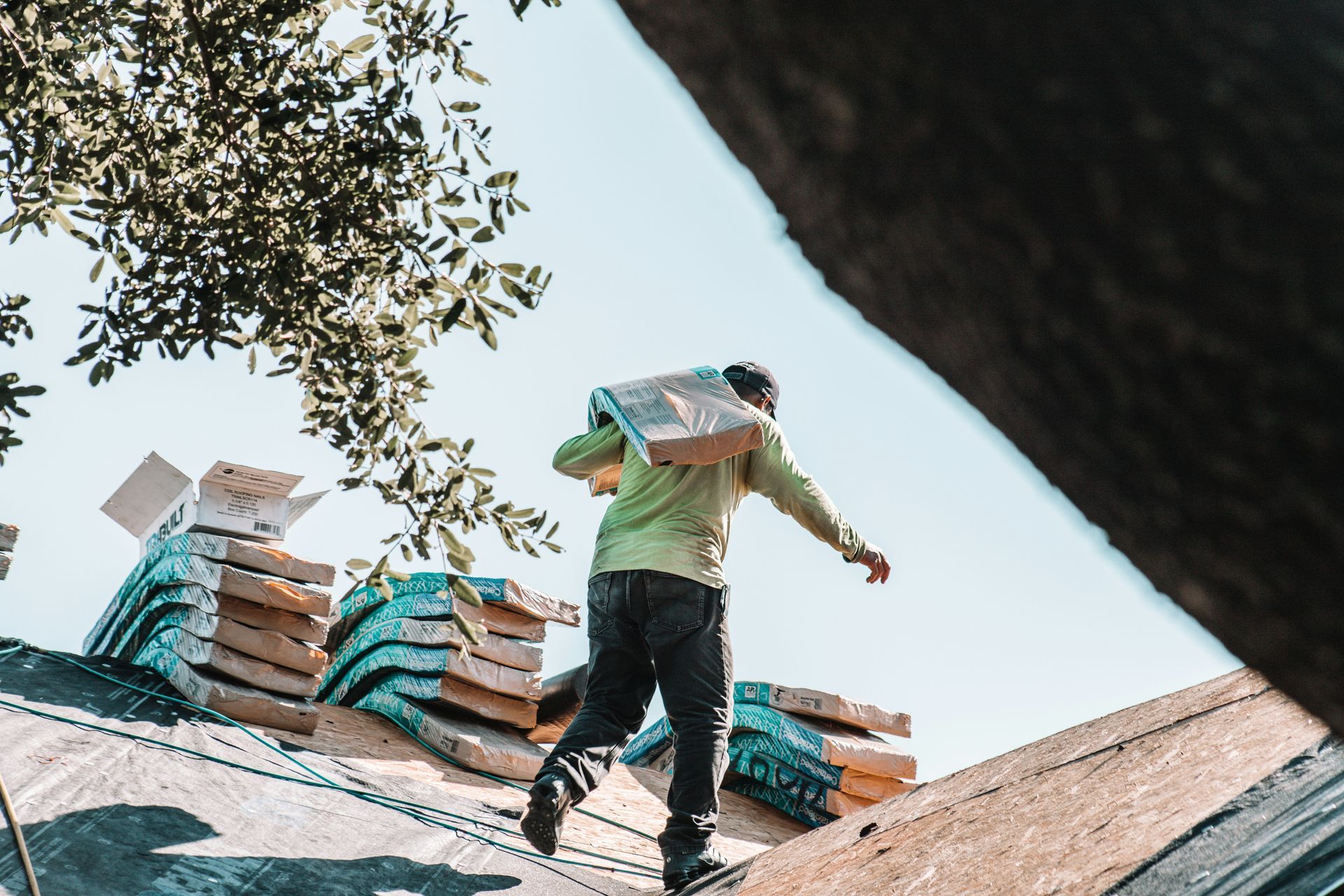
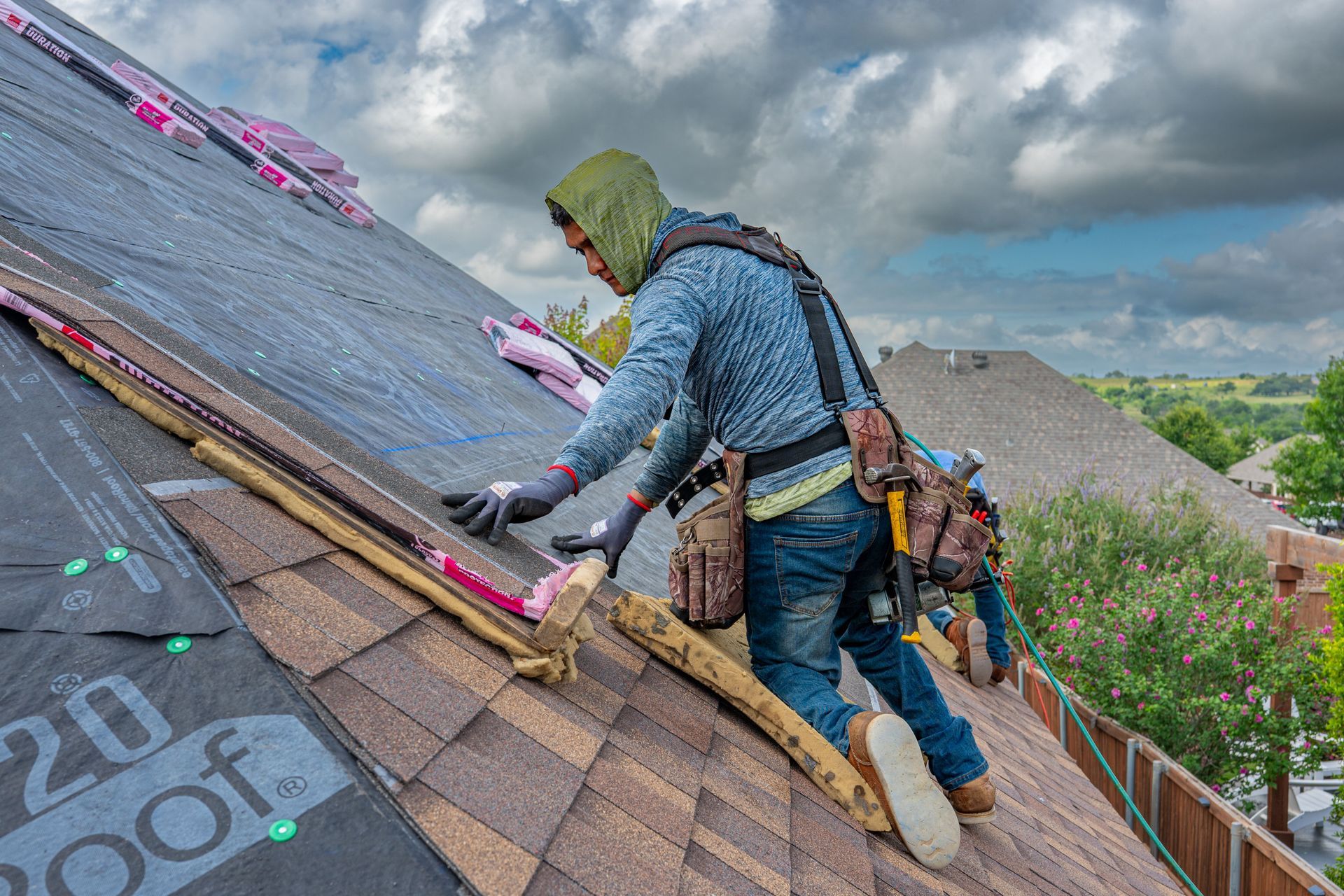
Image credit: Zohair Mirza on Unsplash
How the Rule Applies to Different Roof Types
OSHA writes distinct requirements for the roof styles that crews meet most often. Each one reflects how quickly a worker can slide or stumble toward an edge.
Low-Slope Roofs
A low-slope roof has a pitch of 4 inches of rise or less for every 12 inches of horizontal run. Commercial roofing and flat roofing projects often fall into this group, along with many porch or addition roofs. Workers on these roofs may use guardrails, safety nets, or personal fall arrest systems. Crews may also pair a warning line with one of those systems or with a safety monitoring system, which assigns a trained person to watch for fall hazards.
Steep Roofs
A steep roof rises more than 4 inches for every 12 inches of run. Lakeside homes with dramatic gables and custom roofs often fit this description. For steep roofs, OSHA requires guardrail systems with toeboards, safety nets, or personal fall arrest systems. A personal fall arrest system combines a harness, an anchor point, and a connector that stops a worker mid-fall.
Residential work follows its own paragraph of the rule. Roofers doing residential construction at 6 feet or higher must use one of those same three systems, unless the employer documents that those systems are infeasible and writes a site-specific fall protection plan.
Why Missouri Roofing Crews Answer to Federal OSHA
Missouri does not run its own OSHA-approved State Plan. According to OSHA’s State Plans page, that means federal OSHA covers most private-sector employers in the state, including roofing companies. Contractors from Linn Creek to Four Seasons follow the same federal fall protection rules as crews in any other federal OSHA state.
Roofing also carries real exposure on every job. The Bureau of Labor Statistics publishes fatal injury data by industry and event, and CPWR, a construction research center, maintains a dashboard of falls, slips, and trips data. Together, those resources show why regulators focus so heavily on height.
Fall Protection Basics Every Homeowner Can Recognize
You do not need to read the regulation to spot a safety-minded crew. Look for the equipment and habits the standard describes:
- Harnesses and anchors: Workers on steeper roofs wear harnesses tied to secured anchor points.
- Guardrails or warning lines: Crews on flatter roofs mark off edges or install barriers.
- Training: OSHA’s training rules require employers to teach workers to recognize fall hazards and use the equipment correctly.
- A clear plan: Any reputable contractor can explain how the crew will stay protected before the first shingle comes off.
These signs matter because each one usually reflects how a company runs the whole job. The National Roofing Contractors Association also publishes safety resources that show what a safety-focused roofing business trains its crews to do.
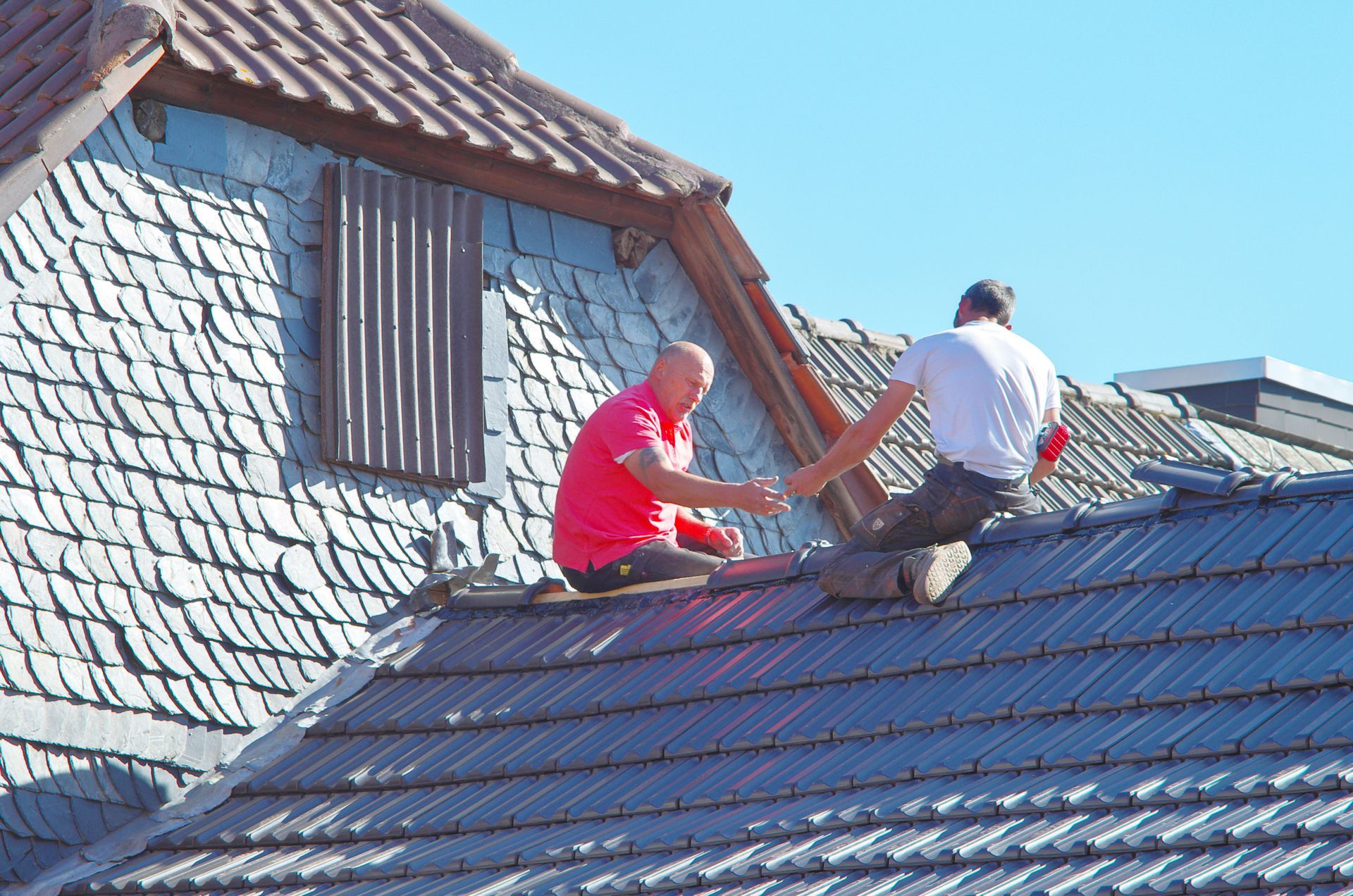
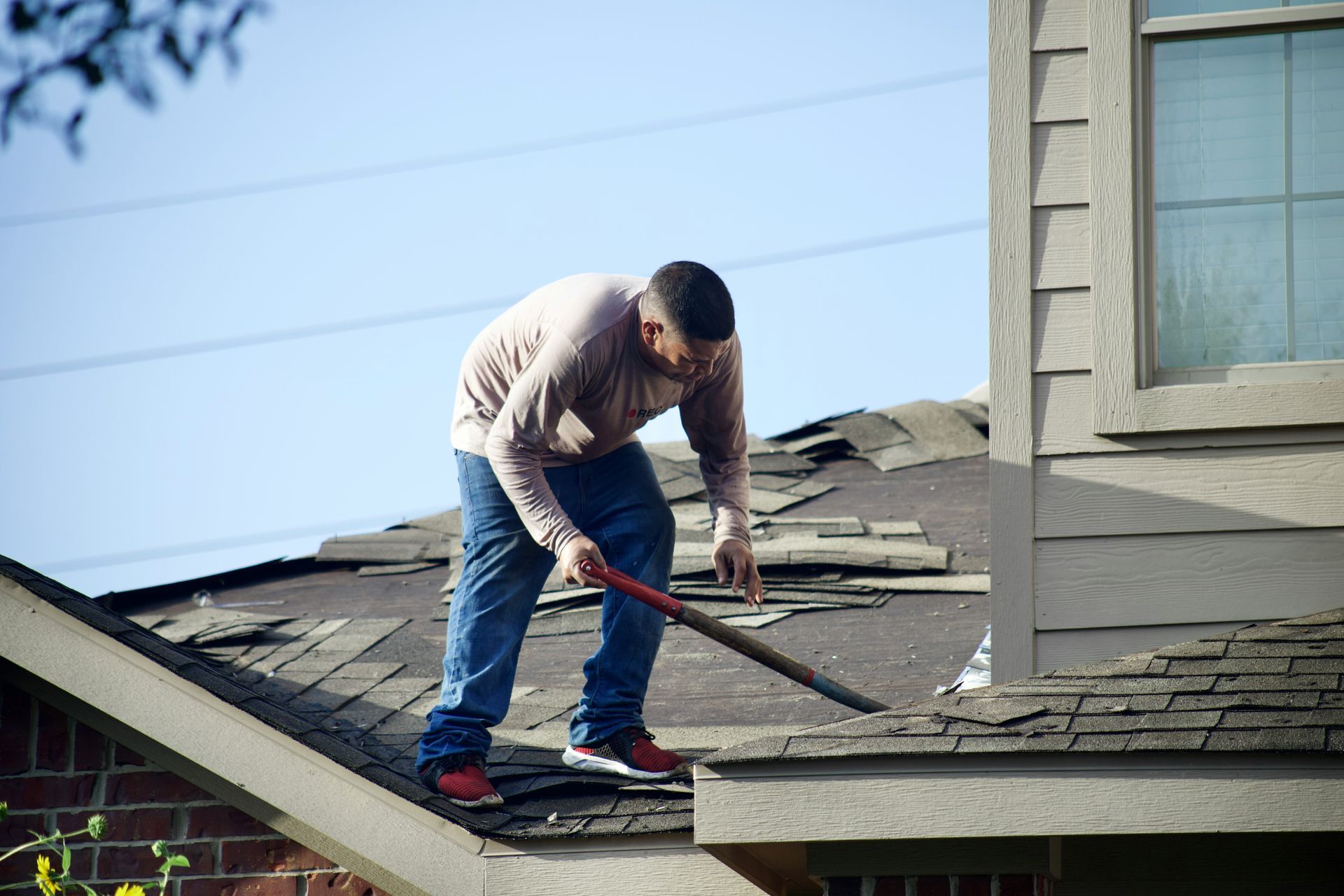
Image credit: Immo Wegmann on Unsplash
What Fall Protection Standards Mean for Lake Ozark Homeowners
Fall protection rules protect more than workers. When a contractor follows them, your property faces less risk from accidents, delays, and disputes. We also encourage you to confirm that any roofer you hire is licensed and insured, since insurance coverage matters if someone gets hurt on your property.
Local conditions add urgency. Storm damage and leaks often push homeowners toward urgent roof repairs, and quick decisions can skip safety questions. Take a few minutes to ask any roofing contractor, including us, how the crew protects against falls, whether the company carries insurance, and who supervises the work on site. Our roofing FAQ can also help you prepare other questions before you call.
Talk With Us About Your Roof in Lake Ozark, MO
Knowing how OSHA’s fall protection rules work gives you the right questions to ask before any roofing project begins. At Lake Ozark Select Roofing, we are a local business serving Lake Ozark, Camdenton, Eldon, Versailles, and our other service areas. Our roofing services include residential and commercial roofing, flat roofing, roof repair for leaks and storm damage, and new roof installation or replacement. We also offer free estimates and financing, and you can browse our project gallery to see our work.
If you have questions about your roof or your project, we welcome them. Contact us to schedule your free estimate, and bring every question you want answered.